Monterey's Median Price Looks Like a Discount. Here's What's Priced Into the Difference.
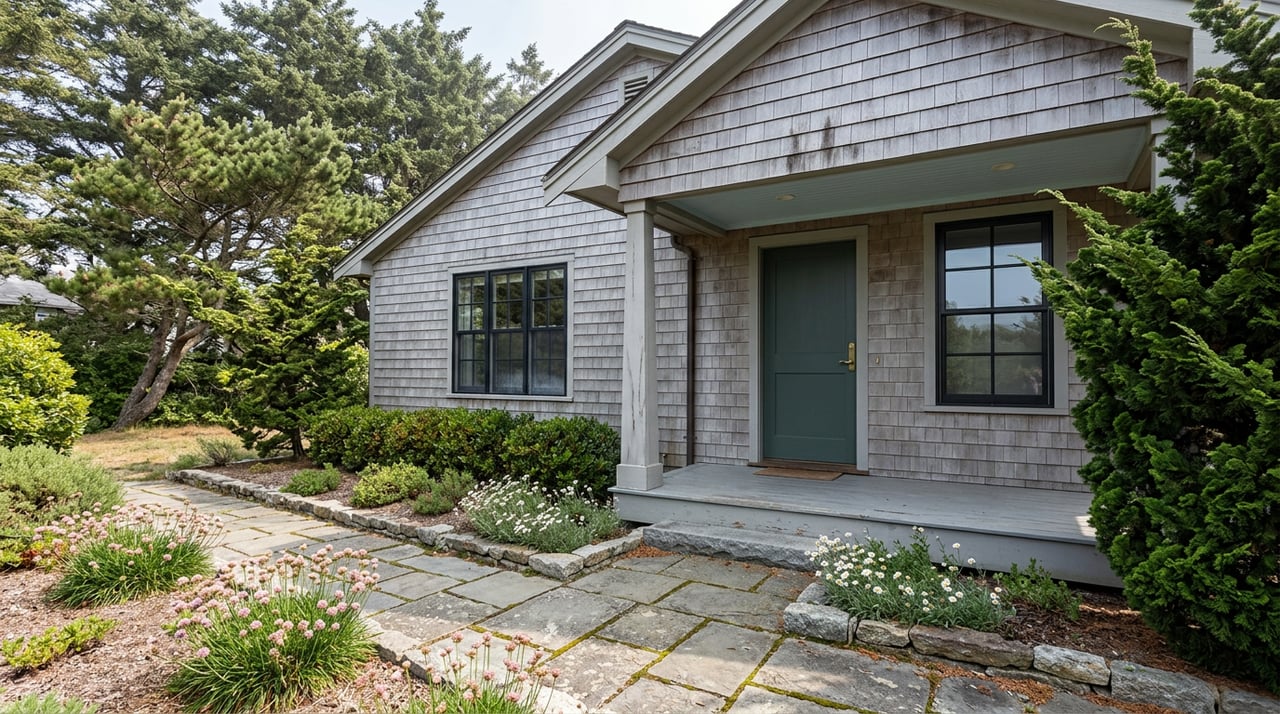
A buyer who has already spent a few weeks watching Santa Cruz County listings knows the number by heart: homes there have been closing around $1.1 million, based on the three months ending May 2026. Then that same buyer looks forty minutes down the coast at Monterey County, sees a median closer to $873,000 for March 2026, and does the obvious math. Same coastline, same fog, same 831 area code, meaningfully lower price. It looks like a discount waiting to be claimed.
It isn't quite that simple. The gap between those two counties isn't just distance from Silicon Valley or a smaller tourist premium. It's the visible result of three things happening underneath the median that don't show up on a portal: a market that moves at a different speed, a short-term rental rulebook that got rewritten in the last twelve months, and a renter base that doesn't exist in Santa Cruz County in the same form. A buyer who treats the price gap as pure savings without understanding what's generating it is going to be surprised at least once during the transaction.
Start with the county-level comparison, because it's the most reliable read available. Over the three months ending May 2026, Santa Cruz County homes sold for a median of $1.1 million and spent an average of 16 days on the market, down from 25 days the year before. Monterey County, for the single month of March 2026, posted a median of $873,000 with homes averaging 28 days on the market, down from 46. Both counties sped up year over year. Monterey just started from a slower baseline and is still there.
City-level numbers get noisier fast. Monterey city itself closed only 19 homes in March 2026, and that thin a sample swings hard: one tracker put the city's median at $875,000, down 31 percent year over year, while a separate aggregator measuring the same city in February 2026 reported a median of $1,145,000, up nearly 55 percent. Both numbers are technically accurate. Neither is a stable read on what a typical Monterey home costs right now. When the sales count drops into the teens, the median stops describing the market and starts describing whichever handful of houses happened to close that month.
A nineteen-sale month doesn't produce a market number. It produces a coin flip that happens to have a dollar sign on it.
That's the first thing the price gap is buying: a market where the county figure is dependable and the city figure needs a second source before anyone treats it as fact.
The most useful Monterey-specific data point isn't the median at all. It's the leverage indicators from February 2026: a sale-to-list ratio of 95.64 percent, only 8.33 percent of homes selling over asking price (down from 16.67 percent the year before), and the share of listings with a price reduction climbing from 75 percent to 83.33 percent. With roughly 48 active listings on the market that month, that's a little over a month of supply.
None of that describes a market in trouble. It describes a market where sellers are pricing to move rather than pricing to test, and where a prepared buyer has room to negotiate on terms, not just hope for a lucky lowball to land. Santa Cruz, by contrast, is still selling in 14 to 16 days at the city and county level, which leaves a lot less room for that kind of back and forth. The lower Monterey median isn't just a smaller number. It's a number attached to a slower, more negotiable process, which matters differently depending on whether the buyer values speed or leverage more.
| Metric | Santa Cruz County (3 mo. ending May 2026) | Monterey County (March 2026) |
|---|---|---|
| Median sale price | $1.1 million | $873,000 |
| Average days on market | 16 days | 28 days |
| Change in DOM from prior year | down from 25 days | down from 46 days |
| Homes sold | 170 | 188 |
For a buyer thinking about a coastal property as a rental play, the more consequential difference has nothing to do with price. It's regulatory, and it changed recently enough that assumptions carried over from Santa Cruz County will actively mislead someone.
In August 2025, the Monterey County Board of Supervisors passed a new ordinance restricting short-term rentals in unincorporated areas, and the California Coastal Commission confirmed it for the coastal zone effective October 24, 2025. The rules that took effect are specific:
There was even a moment where this could have gone further. On January 6, 2026, the Board of Supervisors voted 3 to 2 to ban short-term rentals in all residential zones outright, except for rural residential parcels with an agricultural use. The Planning Commission rejected that broader ban by a vote of 8 to 1, so the operative rules today are the October 2025 framework, not a blanket prohibition. A buyer who read a headline about the January vote and stopped reading there would have the wrong picture of what's actually enforceable on a specific parcel.
Read the full Monterey County vacation rental ordinance guidance directly before assuming a property pencils as a short-term rental. Santa Cruz County has its own separate rules governing vacation rentals, and they don't map onto Monterey's zone-by-zone structure. Treating one county's rulebook as a stand-in for the other is the kind of assumption that surfaces during due diligence, not before an offer.
There's a demand-side mechanism at work here too. Monterey's economy includes the Naval Postgraduate School and the Presidio of Monterey, home to the Defense Language Institute Foreign Language Center. Roughly 5,000 service members are stationed locally at any given time, with about 7,500 family members alongside them, a combined population of around 12,500 that accounts for roughly a fifth of Monterey and Seaside's population together, according to a tally the Presidio's public affairs office reported in 2022, the most recent figures available on the record.
Most of that population rents rather than buys, and much of what they pay is backed by a federal Basic Allowance for Housing rather than a paycheck subject to local layoffs or seasonal tourism swings. That's a rental demand floor Santa Cruz County simply doesn't have in comparable size. It helps explain why a slower home-sale market in Monterey doesn't necessarily signal weak underlying demand. The buying side has cooled. The renting side hasn't, because a meaningful share of it isn't tied to the same economic cycle as everyone else's.
The $200,000-plus gap between Santa Cruz County and Monterey County medians is real, but it isn't free money sitting on the table. Part of it reflects a market that takes almost twice as long to sell a house. Part of it reflects a short-term rental environment that got meaningfully more restrictive in the last year, with permit costs, caps, and HOA-level friction that don't exist the same way in Santa Cruz. And part of it reflects a rental market with a federally subsidized floor that changes what "demand" means locally.
None of that makes Monterey a worse buy. It makes it a different one, with its own mechanics that a Santa Cruz-trained instinct won't automatically catch.
Does Santa Cruz County have short-term rental rules as detailed as Monterey's new ordinance? Santa Cruz County regulates vacation rentals separately from Monterey County, with its own permitting structure. The specifics differ enough that a plan built around one county's rules should not be assumed to work in the other without checking the local ordinance directly.
Is Monterey currently a buyer's market? The available indicators, including a sub-96 percent sale-to-list ratio and a rising share of listings with price cuts as of February 2026, point toward more negotiating room for buyers than Santa Cruz's faster-moving 14 to 16 day market currently offers.
Why did the Monterey city median swing so widely between sources? With only 19 closed sales tracked in one March 2026 dataset, the city-level median is sensitive to which specific homes happened to close that month. County-level figures, drawn from a much larger sample, are the more dependable comparison point.
If you're weighing a Santa Cruz County home against something on the Monterey Peninsula, the numbers on a portal are a starting point, not the whole picture. Room Real Estate works both sides of this comparison regularly, from the mechanics of a specific zoning designation to what a given month's inventory actually supports in an offer. Reach out to talk through what your budget buys in either direction before you write anything.
Stay up to date on the latest real estate trends.
You've got questions and we can't wait to answer them.